
Implantation Timeline: Day-by-Day After Ovulation (2026)
Implantation Timeline: Day-by-Day After Ovulation (2026) Implantation happens 6 to 12 days past ovulation (DPO), and roughly 84% of successful pregnancies implant on days 8, 9, or 10 — with 9 DPO the single most common day. Use the implantation calculator(/health/implantation-calculator) to pin your exact window from your last period and cycle length. Consider a typical case of charting three full cycles while trying to conceive, logging basal body temperature every morning and counting days past ovulation closely. On the cycle that worked, a test at 10 DPO came back a stark white negative — then a clear second line appeared at 13 DPO on the very same cycle, after nothing changed except waiting three more days. That gap illustrates the single most useful fact about this timeline: a negative test before 12 DPO usually measures impatience, not hCG, because the hormone simply has not doubled enough times yet. !Implantation...

Week-by-Week Pregnancy Guide: Trimesters, Due Date and Milestones (2026)
Week-by-Week Pregnancy Guide: Trimesters, Due Date and Milestones A full-term pregnancy runs 40 weeks, split into 3 trimesters — first trimester weeks 1-13, second trimester weeks 14-27, and third trimester weeks 28-40 — and your due date equals the first day of your last menstrual period (LMP) plus 280 days. Weeks pregnant are counted as the number of days since your LMP divided by 7, which is why the count starts about two weeks before conception. Use the Due Date Calculator(/health/due-date-calculator) to turn your LMP into an exact estimated delivery date and trimester timeline. A common arithmetic slip repeats across pregnancy tracking: counting from the day of conception lands two weeks short of what a provider says. Here is the math that clears it up. A person whose LMP was March 1, 2026 is exactly 98 days along on June 7, 2026, and 98 divided by 7 is 14 —...

Macro Calculator for Cutting and Bulking: How to Calculate Your Macros
Macro Calculator for Cutting and Bulking: How to Calculate Your Macros Macros (macronutrients) are protein, carbohydrates, and fat — the three sources of calories in your diet. For cutting (fat loss), a typical macro split is 40% protein, 35% carbs, 25% fat. For bulking (muscle gain), it's 25% protein, 50% carbs, 25% fat. But the right split depends on your calories, preferences, and goals. Dialing in macros usually takes some trial and error, but the payoff shows up in results like this: a 12-week cut at 185g protein, 240g carbs, and 70g fat can take someone from 198 to 181 pounds while keeping bench press steady at 275 lbs. Tracking macros instead of just calories is the difference between losing muscle and losing only fat. If you are new to tracking, start by calculating your protein needs(/blog/protein-calculator-guide) first since protein is the most important macro for body composition. Use our...
One Rep Max Calculator: How to Find Your 1RM for Any Lift
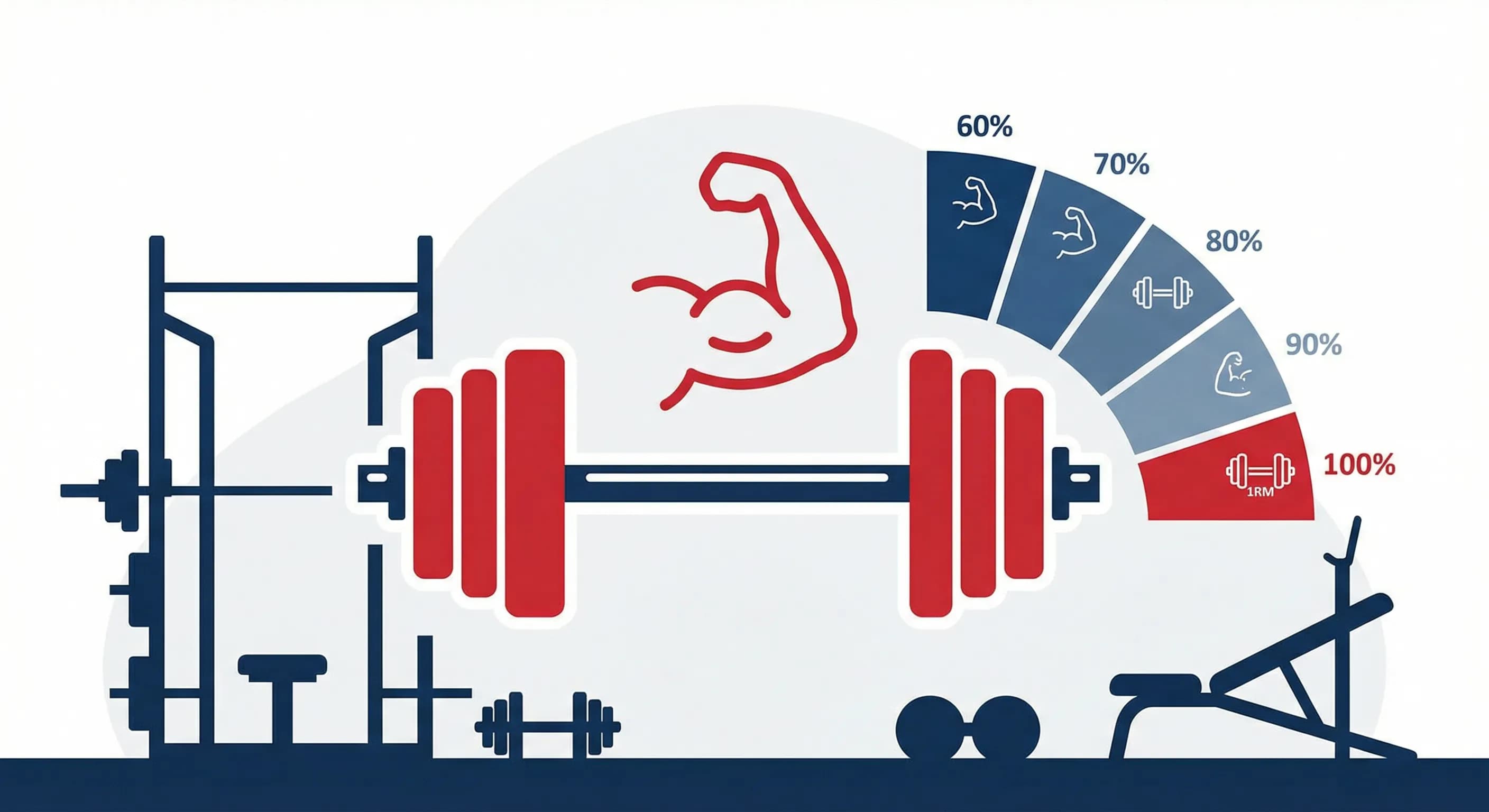
One Rep Max Calculator: How to Find Your 1RM for Any Lift Your one rep max (1RM) is the maximum weight you can lift for a single repetition with proper form. Rather than actually testing your max (risky without experience), you can estimate it from submaximal lifts. If you can bench press 185 lbs for 5 reps, your estimated 1RM is approximately 208 lbs. Knowing your 1RM changes how you program every workout. A lifter with several years of consistent training might land on estimated maxes like a 315-lb bench press, a 425-lb squat, and a 495-lb deadlift, all calculated from submaximal sets rather than risky true max attempts. Pairing 1RM-based programming with proper protein intake(/blog/protein-calculator-guide) is often what pushes a bench press past a long-standing plateau — for example, breaking through a 300-lb sticking point after two years of stalling. Use our One Rep Max Calculator(/health/calories-burned-calculator) to estimate your...
Protein Calculator: How Much Protein Do You Need Per Day?
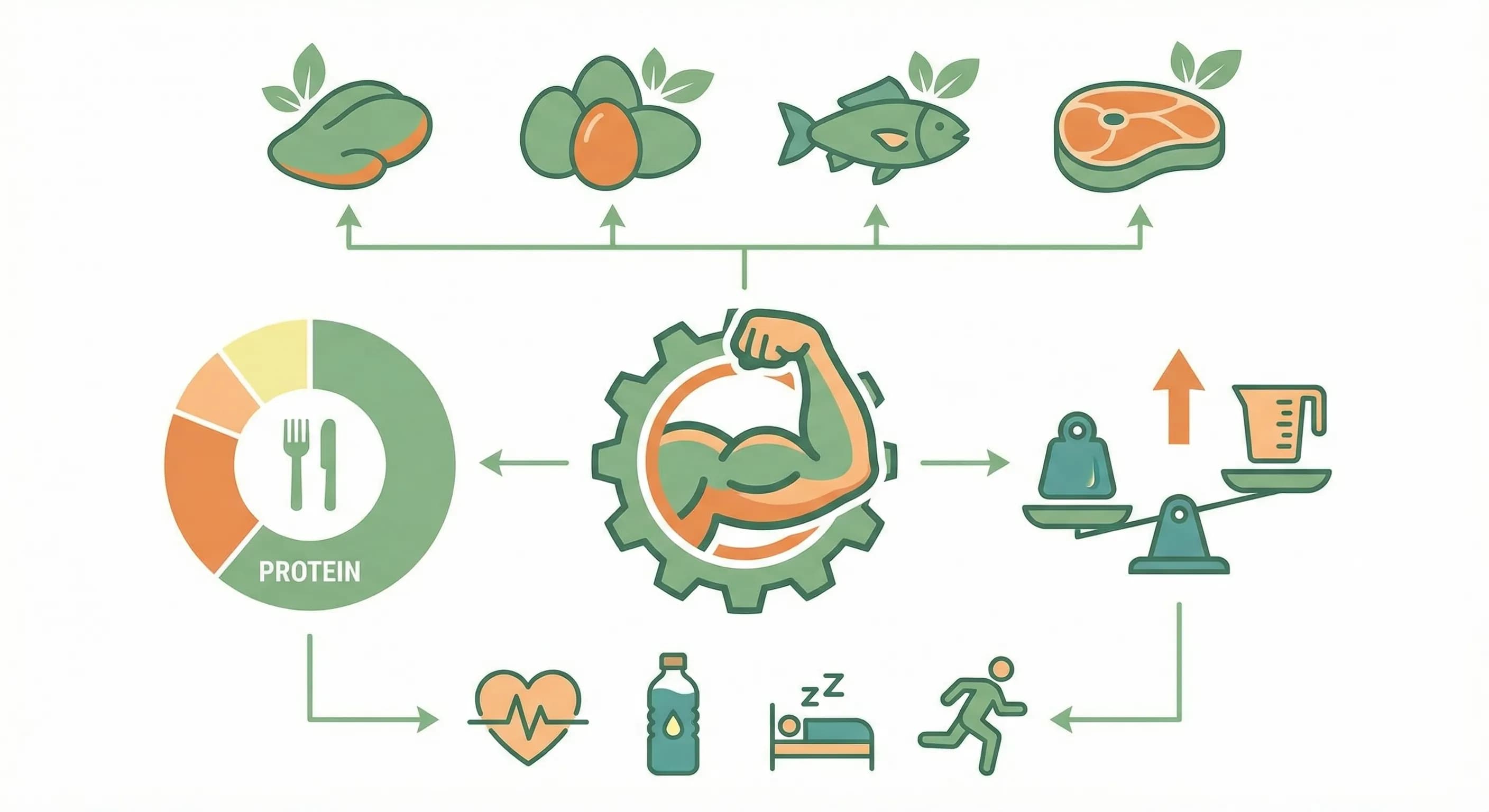
Protein Calculator: How Much Protein Do You Need Per Day? For muscle building and active individuals, aim for 0.7-1.0 grams of protein per pound of body weight. A 180-pound person focused on building muscle needs 126-180 grams of protein daily. For general health, 0.36 grams per pound (the RDA minimum) is sufficient, but most active people benefit from more. Consider a representative case: a 185-pound lifter eating only 80 grams of protein per day for the first two years of training sees little muscle gain. Bumping intake to 170 grams daily, split across four meals, can add 12 pounds of lean mass in six months while keeping body fat around 14%. Dialing in protein alongside tracking macros(/blog/macro-calculator-guide) is often the single biggest change that moves the needle. Use our Protein Calculator(/health/protein-intake-calculator) to get personalized recommendations based on your weight, goals, and activity level. !Daily protein needs chart showing grams per...
When Did I Conceive? Understanding Conception Dates and Calculations
When Did I Conceive? Understanding Conception Dates "When exactly did I get pregnant?" Whether you're curious about that romantic getaway, need to know for medical reasons, or are simply piecing together your pregnancy timeline, determining your conception date is a common question. The answer involves a bit of biology and math. Quick answer: Conception typically occurs about 14 days before your next expected period, or roughly 2 weeks after the first day of your last menstrual period (LMP) for those with 28-day cycles. From your due date, you can calculate backwards: conception occurred approximately 266 days (38 weeks) before your due date. A worked example shows how close these calculations can get with good cycle data. Take an LMP of January 3rd with cycles averaging 30 days, tracked with OPKs that showed a positive surge on cycle day 17. Working backwards from an 8-week ultrasound dating, the estimated conception date...
Due Date Calculator: How Accurate Is Your Due Date Really?
Due Date Calculator: How Accurate Is Your Due Date Really? Your due date feels like everything. It's the day you circle on the calendar, count down to, plan around. But here's the reality check most pregnancy books gloss over: Only about 5% of babies are born on their exact due date. Your due date is better understood as a due "window"—most babies arrive sometime between 37 and 42 weeks of pregnancy. The standard 40-week calculation gives you a target, but your baby will arrive when they're ready. This plays out differently for every pregnancy. Consider two examples: a due date set for October 12th based on LMP, then moved to October 8th after an 8-week ultrasound -- with the baby arriving on October 17th, a full 9 days past the adjusted date. In a second pregnancy, the due date was March 22nd, and the baby came at 38 weeks and...
Implantation: Timeline, Symptoms, and What to Expect
Implantation: Timeline, Symptoms, and What to Expect The two-week wait. If you're trying to conceive, you know this period all too well—those nail-biting days between ovulation and when you can finally take a pregnancy test. During this time, something remarkable may be happening inside your body: implantation. Quick answer: Implantation typically occurs 6-12 days after ovulation (DPO), with most implantation happening between days 8-10. This is when the fertilized egg (now a blastocyst) attaches to your uterine wall, marking the true beginning of pregnancy. Consider a representative case: faint pink spotting at 9 DPO that lasts less than a day -- different from typical pre-period spotting, which tends to be brown and start around 12 DPO. Mild, pulling cramps low in the abdomen at 8 DPO can feel distinctly different from typical PMS cramping. Testing at 11 DPO with an early detection test might show a faint positive that darkens...
Pregnancy Week by Week: Complete Trimester Guide and Fetal Development
Pregnancy Week by Week: Complete Trimester Guide Every week of pregnancy brings new developments. From a cluster of cells smaller than a poppy seed to a fully-formed baby ready for the world, the transformation is nothing short of miraculous. Quick orientation: Pregnancy lasts 40 weeks and is divided into three trimesters. The first trimester (weeks 1-13) is when all major organs form. The second trimester (weeks 14-27) is when baby grows rapidly and you start feeling movement. The third trimester (weeks 28-40) is when baby gains weight and prepares for birth. Many parents check what's happening week by week obsessively -- first flutters commonly show up around week 19, the anatomy scan lands at week 20, and OBs typically recommend starting kick counts at week 28. A baby might arrive anywhere from 37 to 42 weeks, with 40 weeks and 3 days being a common full-term example. That week-by-week tracking...
Calorie Deficit: Complete Guide to Losing Weight Safely and Effectively
Calorie Deficit: Complete Guide to Losing Weight Safely and Effectively Weight loss attempts often follow a familiar pattern: trying everything from keto to juice cleanses to the cabbage soup diet, losing weight, then gaining it back plus a few extra pounds. The science of energy balance changes that pattern. Not a fad. Not a shortcut. Just math that actually works. A sustainable calorie deficit can produce results like 35 pounds lost over 8 months and kept off long-term, because the underlying math -- not willpower -- is what holds. This guide lays out that calorie deficit explanation clearly, from the ground up. How Many Calories to Lose Weight? Calculate Your Daily Calories →(/health/calorie-calculator) Use our free calorie calculator(/health/calorie-calculator) to instantly determine your daily calorie needs for weight loss, maintenance, or muscle gain. You can also check your TDEE(/health/tdee-calculator) (Total Daily Energy Expenditure) for more detailed insights. A calorie deficit occurs...